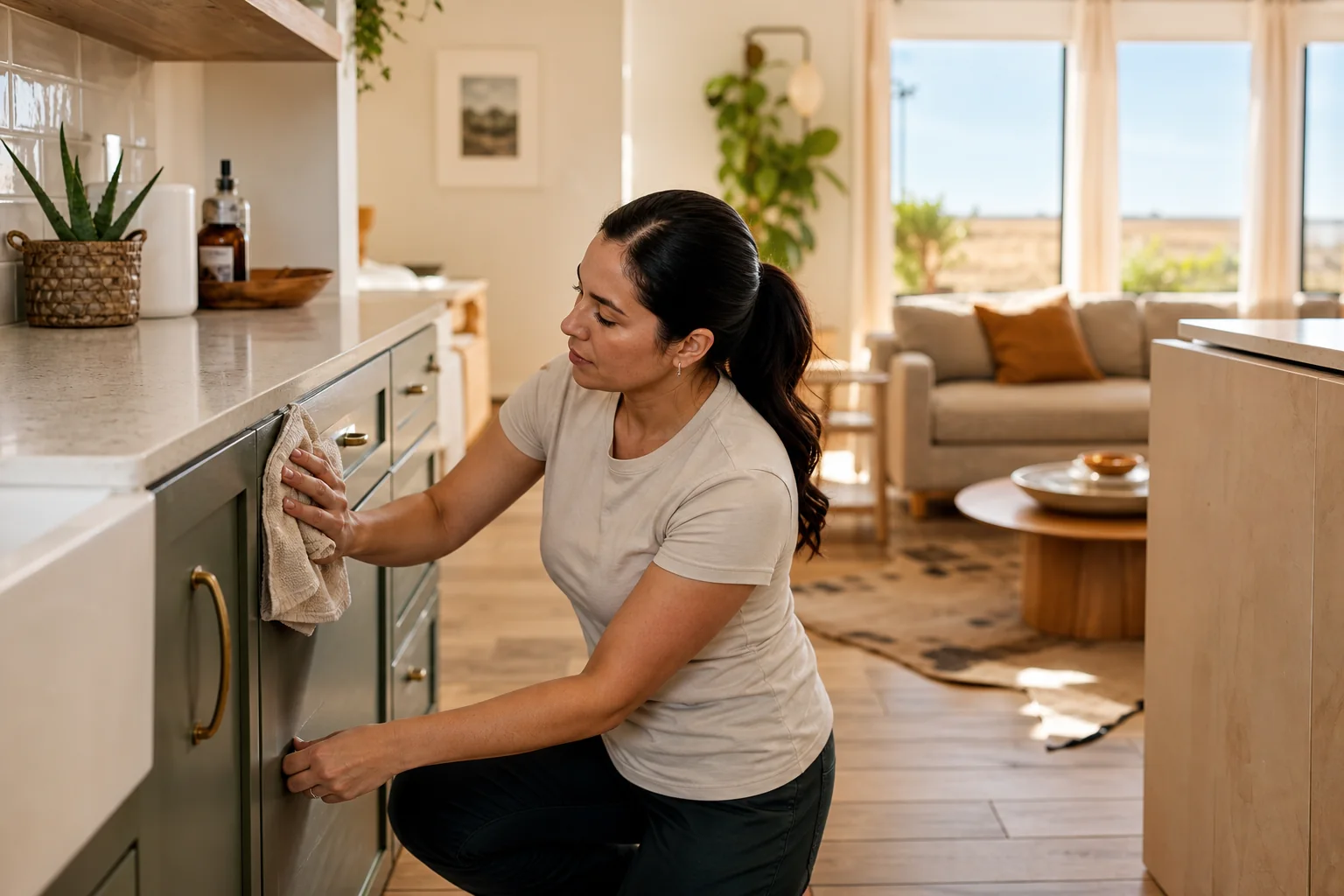
A home with two adults, two children, a shedding dog, and constant kitchen use will need a different rhythm than a quiet one-bedroom apartment. Start with the life happening inside the space—not a generic rule.
The short answer
Weekly service works best for busy, high-use households that want the home to remain consistently reset. Biweekly cleaning is the most practical middle ground for many homes. Every four weeks can support lighter-use households, but it is closer to a periodic refresh than hands-off maintenance.
If the kitchen, bathrooms, floors, and dust are noticeably behind for several days before each appointment, the current interval may be too long.
Weekly, biweekly, or every four weeks?
Weekly cleaning
Weekly visits keep the gap between resets short. They can be a good fit when children and pets create frequent floor care, someone works from home, the kitchen is used heavily, allergies make dust control important, or free time is already scarce. Shorter intervals also mean less buildup at each visit, allowing attention to stay on consistent maintenance.
Biweekly cleaning
Every two weeks balances professional help with light upkeep between visits. It often suits households that can manage dishes, spills, laundry, and quick floor touchups but do not want bathrooms, whole-home dusting, vacuuming, and mopping to become a weekend project.
Every-four-weeks cleaning
Monthly service can work for smaller homes, fewer occupants, limited pet hair, low cooking volume, or households that already clean regularly. Because more time passes between visits, dust, soap residue, and floor soil have longer to collect. Expectations and scope should reflect that.
Five factors that should shape your schedule
- People and daily use. More occupants usually mean more dishes, bathroom use, fingerprints, crumbs, and floor traffic.
- Pets. Shedding, tracked soil, litter, and nose prints can shorten the comfortable interval.
- Flooring and local dust. Hard floors tend to make dust visible, while carpet can hold soil until it is vacuumed. West Texas wind and dry conditions can also bring fine dust indoors.
- Your tolerance for in-between upkeep. Some households prefer small daily resets; others would rather reserve their time and schedule more frequent service.
- Priority rooms. A heavily used kitchen and shared bathrooms may determine the cadence even when bedrooms stay relatively easy.
Should the first visit be a deep clean?
Recurring cleaning is designed to maintain a baseline. If baseboards, cabinet fronts, fixtures, fans, trim, or bathroom surfaces have accumulated buildup, an initial deep clean may create that baseline first. It gives the recurring plan a cleaner starting point instead of using maintenance time to chase older detail work.
A deep clean is not automatically necessary. Share accurate information about the home’s size, condition, pets, and priorities so the scope can be matched to what is actually needed.
Keep the result longer between visits
- Wipe fresh spills before they dry or spread.
- Run or empty the dishwasher before the kitchen becomes congested.
- Use entry mats and keep outdoor shoes near the door.
- Give pet-hair hotspots a quick vacuum when needed.
- Clear counters and floors before the appointment so cleaning time stays focused on surfaces.
The right frequency should feel sustainable. Choose a starting cadence, notice how the home feels during the final few days before service, and adjust if the gap consistently asks too much of you.