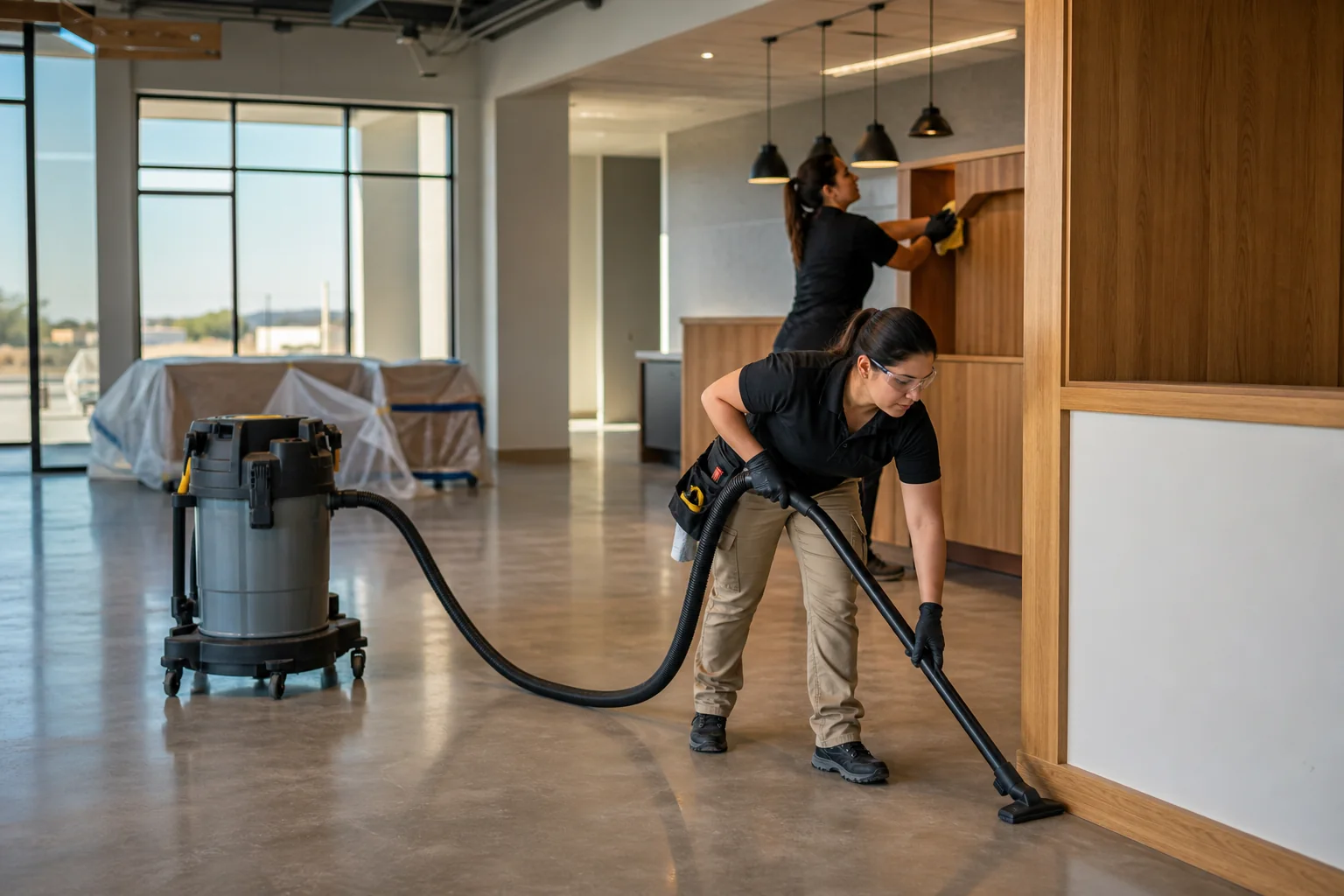
Construction cleaning must fit the build schedule, surface specifications, site rules, and handoff standard. The names of the phases vary between projects, so each proposal should define tasks and readiness instead of relying on a label alone.
Why construction cleaning is different
Fine dust settles repeatedly, new finishes may need manufacturer-approved care, and incomplete work can recontaminate cleaned areas. Access, lighting, climate control, water, power, debris responsibility, high work, and safety requirements all affect labor and method.
Post-construction cleaning is not demolition cleanup, hazardous dust remediation, or heavy debris hauling. Those responsibilities should be assigned before cleaning is scheduled.
A date alone does not make an area clean-ready. Define the physical conditions that must be true before each phase begins.
1. Rough clean
A rough clean occurs after major dusty work in an area has substantially ended but before every finish detail is complete. Its purpose is to remove loose construction soil and support the next project stage—not to deliver the final presentation standard.
Possible rough-clean tasks
- Collect light packaging and approved small debris.
- Vacuum or sweep loose dust from accessible floors and horizontal surfaces.
- Clean selected wall, cabinet, or fixture areas before final installation.
- Prepare specific spaces for flooring, casework, inspection, or trade access as defined.
Typical readiness point
Bulk debris and hazardous material are removed, active demolition is complete, pathways are safe, and the project team has identified which installed surfaces can be cleaned without interfering with ongoing work.
2. Final clean
The final clean is the most detailed phase. It takes place when finish work is substantially complete and the project is approaching inspection, turnover, photography, or occupancy.
Possible final-clean tasks
- Remove fine dust from reachable horizontal and vertical surfaces within scope.
- Detail millwork, cabinet interiors, fixtures, doors, frames, trim, and baseboards.
- Clean interior glass, frames, tracks, and labels or adhesive when safely removable and approved.
- Vacuum carpet and clean hard floors using methods appropriate to the new finish.
- Clean restrooms, break areas, and installed appliances included in the plan.
Typical readiness point
Trades are substantially out of the area, punch work that creates dust is complete, protective film designated for removal is identified, permanent utilities and lighting are available, HVAC conditions are stable, and surfaces have cured according to project requirements.
3. Touch-up clean
Punch corrections, inspections, furniture delivery, and final trade visits can leave fingerprints, footprints, and light dust after the final clean. A touch-up visit restores presentation shortly before handoff.
Touch-up is not automatically a second final clean. Define which areas will be revisited, what level of re-soiling is expected, and how added work will be approved if other activity substantially changes the condition.
Typical touch-up tasks
- Remove light settled dust and visible floor soil.
- Address fingerprints on glass, doors, fixtures, and millwork.
- Recheck restrooms, entries, presentation areas, and agreed punch locations.
- Complete an acceptance walkthrough with the designated project contact.
Information needed to scope the project
- Plans, square footage, site address, room types, and finish schedule.
- Current photos, walkthrough access, and the construction schedule.
- Required phases, milestones, work hours, and completion deadlines.
- Responsibility for dumpsters, bulk debris, adhesive, labels, and protective coverings.
- High-access work, equipment, certifications, PPE, and site orientation requirements.
- Utilities, climate, loading, parking, elevators, keys, and security.
- Acceptance standard, inspection contact, and correction process.
Protect new finishes
Provide material and manufacturer care requirements when they are known. Testing an inconspicuous area, using appropriate tools, and avoiding undocumented aggressive chemicals can reduce risk. Existing defects, trade damage, paint overspray, scratched glass, and permanent adhesive may require documentation or specialty remediation rather than ordinary cleaning.
A staged plan makes the clean part of project control. When readiness, responsibilities, and acceptance are agreed before mobilization, crews can focus on producing the handoff condition instead of negotiating it on site.