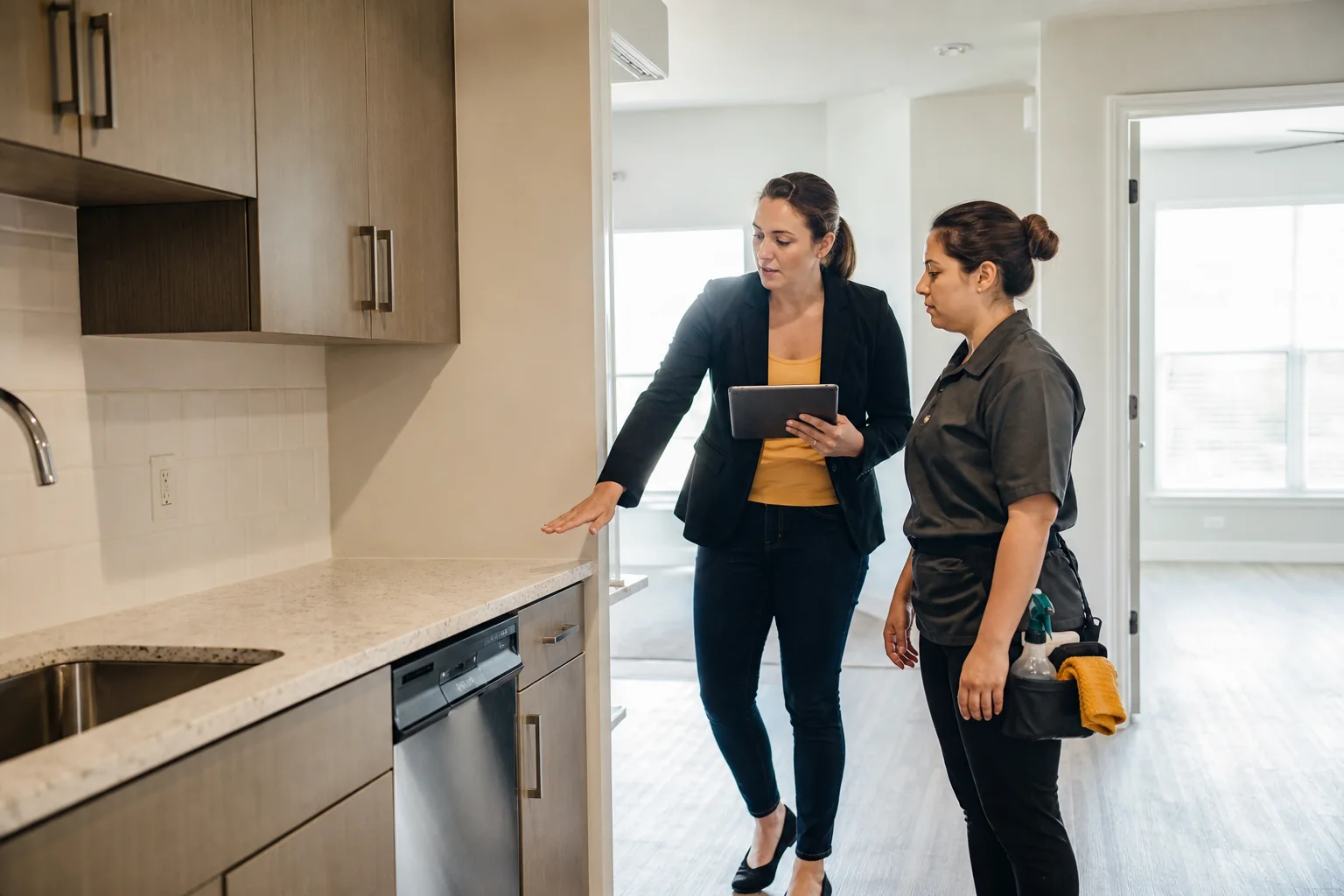
An urgent ready date cannot compensate for missing keys, active paint work, a refrigerator full of food, or an undefined cleaning standard. The best turnover systems make readiness visible before anyone is dispatched.
Define “resident-ready” in observable terms
Words like “clean” and “done” leave room for different interpretations. A useful standard names the rooms, surfaces, exclusions, and acceptance points. It should answer whether appliance interiors, cabinet interiors, blinds, interior glass, balconies, garages, and condition photos are included.
Separate cleaning from responsibilities that belong to other scopes: trash-out, furniture removal, pest treatment, mold or hazard remediation, carpet extraction, paint, repairs, and floor restoration. This prevents a cleaner from arriving to a unit that is not safe or ready.
Use the same core checklist for every turn, then attach unit-specific exceptions. Consistency makes estimates, inspections, and feedback much easier to compare.
Send a complete work order
- Property name, building, unit number, floor, and layout.
- Target ready date and the actual deadline for cleaning completion.
- Lockbox, key, gate, alarm, parking, and after-hours instructions.
- Current condition, including photos when buildup or damage is unusual.
- Approved scope, add-ons, exclusions, and spending authorization.
- On-site and after-hours contacts who can answer questions quickly.
- Utilities, climate control, lighting, and any known safety restrictions.
Avoid placing critical changes in a long message thread. Keep the current unit status and approved scope in the work order that every party can reference.
Sequence the work to avoid rework
A practical sequence is: move-out and condition assessment, trash-out, pest or hazard work, repairs, painting, maintenance installation, specialty flooring or carpet work, final cleaning, quality inspection, then photography or showing. The exact order may vary, but dusty and disruptive work should finish before final cleaning.
If a trade must return after cleaning, identify the affected rooms and plan a limited touch-up instead of silently treating a second whole-unit clean as part of the original scope.
Use a readiness gate
Before dispatch, confirm that belongings and trash are gone, repairs and paint are dry, vendors are out, power and water work, appliances are installed, and the unit can be secured. A quick readiness check can save an entire failed trip.
Make the cleaning scope inspectable
Organize tasks by zone rather than a loose master list. For example: kitchen, bathrooms, bedrooms and closets, common areas, entries, and selected exterior spaces. Within each zone, name the reachable surfaces and whether interiors are included.
- Kitchen: counters, sink, cabinet fronts, empty storage as scoped, appliance exteriors and approved interiors, floor, and trim.
- Bathrooms: fixtures, tub or shower, vanity, mirror, toilet, reachable vents and trim, and floor.
- Living areas: reachable dusting, doors, baseboards, closets, interior glass or blinds when approved, and floors.
- Exceptions: damage, permanent staining, heavy debris, hazards, or inaccessible areas documented for the property team.
Close the loop with simple quality control
Inspect against the same checklist used to order the work. Review the unit in daylight where possible, open storage, look behind doors, and check floor edges. Report corrections promptly with a room, surface, and photo rather than a vague “unit needs more cleaning.”
Track repeated misses by category. If the same issue appears across units, the remedy may be a checklist clarification, a sequencing change, or a scope adjustment—not simply another reminder.
Metrics worth watching
- First-pass acceptance rate
- Failed trips caused by unit readiness
- Average time from clean-ready to inspection-ready
- Repeat correction categories
The goal is not to rush every unit. It is to remove avoidable waiting and rework so each turn moves predictably from vacancy to resident-ready condition.